

Buying a home in the Silver State is an exciting milestone, but the path to closing can be fraught with financial pitfalls. According to recent housing market data, nearly 40 percent of first-time buyers encounter significant delays due to avoidable financing errors. In a competitive market like Las Vegas and Henderson, where inventory shifts rapidly, these mistakes can cost you your dream home or thousands in interest. Understanding the unique lending landscape of Nevada is critical for securing the best possible terms.
The Pre-Approval Trap
Many buyers confuse pre-qualification with pre-approval. Pre-qualification is a casual estimate based on self-reported data. Pre-approval is a verified commitment from a lender after reviewing your financial documents. In Nevada's fast-moving market, sellers often reject offers from unverified buyers. Working with a trusted local expert ensures you get a true pre-approval letter that carries weight with listing agents.
Without a solid pre-approval, you risk falling in love with a property only to find out you cannot afford it. This wastes valuable time and may cause you to miss out on new listings. A strong pre-approval signals to sellers that you are a serious, qualified buyer ready to close quickly.
Credit Score Mismanagement
Your credit score directly influences your interest rate and loan eligibility. A common mistake is failing to check your credit report for errors before applying. Even small inaccuracies can lower your score and increase your borrowing costs. It is essential to dispute any errors and pay down high balances well before you submit a mortgage application.
Another critical error is opening new credit lines during the homebuying process. New inquiries can temporarily drop your score. Additionally, maxing out credit cards can negatively impact your debt-to-income ratio. Maintain your current credit habits and avoid any major financial changes until after closing.
Down Payment Myths
Many first-time buyers believe they need a 20 percent down payment to secure a loan. This is a widespread myth. Nevada offers several programs, including FHA loans and Nevada Housing Division resources, that allow for down payments as low as 3 to 5 percent. However, putting less than 20 percent often requires Private Mortgage Insurance (PMI).
Understanding the true cost of PMI is vital. While it lowers your upfront cash requirement, it adds to your monthly payment. You must weigh the benefit of keeping more cash in reserve against the long-term cost of insurance. A knowledgeable agent can help you navigate these options to find the best fit for your budget.
Ignoring Debt-to-Income Ratios
Lenders strictly evaluate your Debt-to-Income (DTI) ratio. This metric compares your monthly debt payments to your gross monthly income. A common mistake is taking on new debt, such as a car loan or student loan payments, before closing. Even a small new debt can push your DTI over the lender's limit, causing your loan to be denied.
Keep your financial profile static during the underwriting process. Do not co-sign loans for others or make large purchases on credit. If your DTI is borderline, consider paying off small debts to improve your ratio before applying. This simple step can significantly improve your loan terms.
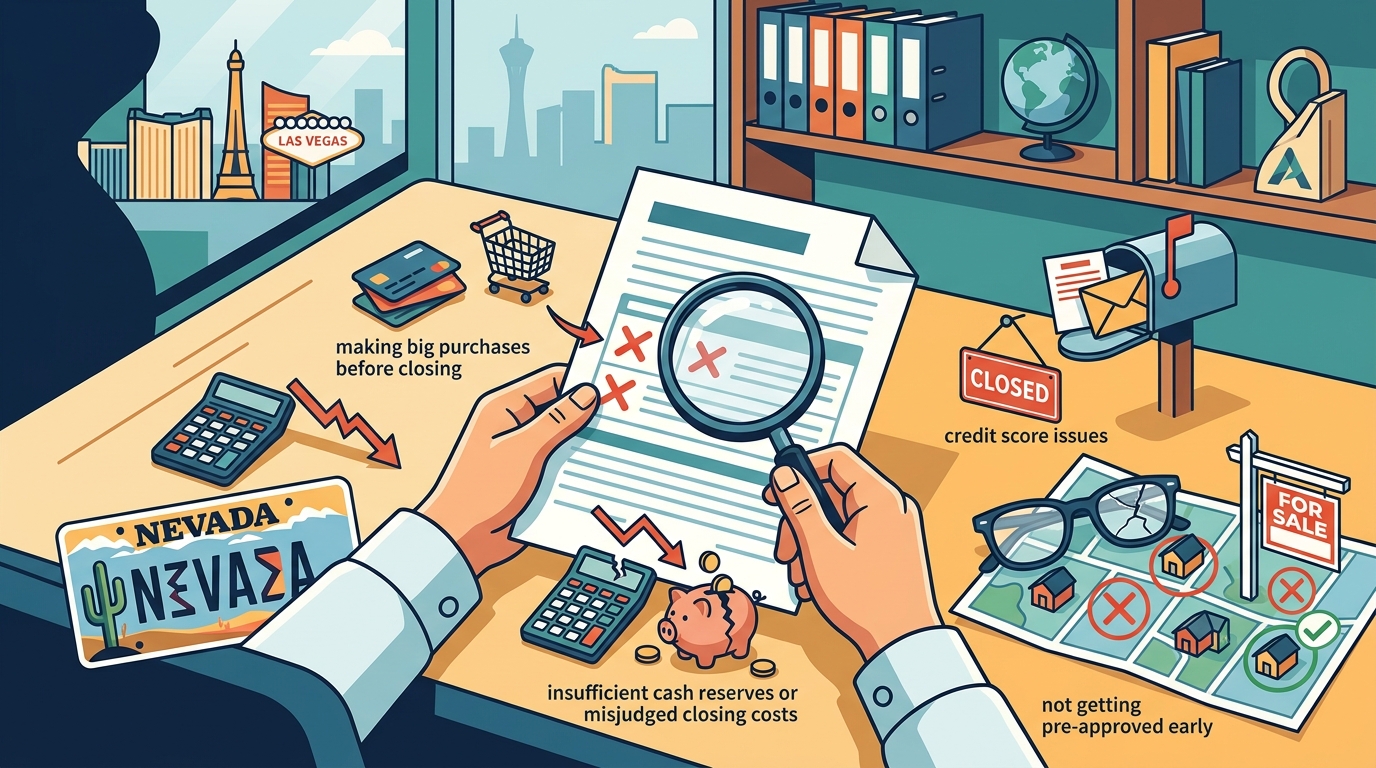
Underestimating Closing Costs
Closing costs in Nevada typically range from 2 to 5 percent of the home's purchase price. First-time buyers often focus solely on the down payment and forget to budget for these additional fees. These costs include appraisal fees, title insurance, escrow fees, and recording taxes.
Failure to account for closing costs can leave you short on cash at the table. Request a Loan Estimate from your lender early in the process to understand these expenses. Some sellers may agree to contribute to closing costs, but this must be negotiated upfront. Always have a contingency fund ready to cover any unexpected fees.
Rate Lock Timing
Interest rates fluctuate daily. Locking your rate too early can be risky if rates drop further. Locking too late exposes you to potential increases. The optimal time to lock depends on market trends and your closing timeline. Work with your lender to determine the best strategy for your specific situation.
Consider a float-down option if available. This allows you to benefit from lower rates if they drop before closing, while still protecting you from increases. Understanding these nuances can save you thousands over the life of your loan. Always ask your lender about their rate lock policies and fees.
Financing Options Comparison
Choosing the right loan type is crucial for long-term financial health. Below is a comparison of common financing options for Nevada homebuyers.
| Loan Type | Minimum Down Payment | Best For | Key Consideration |
|---|---|---|---|
| FHA Loan | 3.5% | Buyers with lower credit scores | Requires Mortgage Insurance Premiums |
| Conventional Loan | 3-5% | Buyers with good credit | PMI required if down payment < 20% |
| Nevada Housing Division | 3% | First-time buyers in NV | Income limits may apply |
| VA Loan | 0% | Eligible veterans and service members | No PMI required |
Key Takeaways
- Pre-approval is non-negotiable: Sellers in Las Vegas prioritize verified buyers.
- Protect your credit: Avoid new debt and credit inquiries during the process.
- Down payment myths: You do not need 20 percent down to buy a home.
- Monitor DTI: Keep your debt-to-income ratio stable to avoid loan denial.
- Budget for closing: Reserve 2-5 percent of the purchase price for closing costs.
- Lock rates wisely: Use float-down options to protect against market volatility.
- Use local expertise: Partner with a Nevada specialist to navigate state-specific programs.
Frequently Asked Questions
How much do I need for a down payment in Nevada?
You can buy a home in Nevada with as little as 3 percent down using conventional or FHA loans. Nevada Housing Division programs may offer even more favorable terms for eligible first-time buyers.
What is the average closing cost in Las Vegas?
Closing costs in Las Vegas typically range from 2 to 5 percent of the home's purchase price. This includes lender fees, title insurance, and escrow charges.
Can I buy a home with bad credit in Nevada?
Yes, FHA loans allow borrowers with credit scores as low as 580 to qualify with a 3.5 percent down payment. Some lenders may offer programs for scores below 580 with a higher down payment.
How long does the mortgage approval process take?
The underwriting process typically takes 30 to 45 days. However, this can vary based on the complexity of your financial profile and the current market volume.
Should I pay off my credit cards before buying a house?
Paying off high balances can improve your credit score and lower your debt-to-income ratio, which may help you qualify for better loan terms. Consult your lender for specific advice.
What is a rate lock?
A rate lock is an agreement with your lender to hold a specific interest rate for a set period, usually 30 to 60 days, until your loan closes.
Are there first-time homebuyer programs in Nevada?
Yes, the Nevada Housing Division offers various assistance programs, including down payment assistance and favorable loan products for first-time buyers.
Start Your Home Buying Journey Today
Avoid these common financing mistakes and secure your future in Nevada with confidence. Allen Zeller provides expert guidance through every step of the process, from pre-approval to closing. Contact Allen Zeller today to schedule a consultation and discover your home ownership potential.